
건널 수 없는 거리 사이에서 Uncrossable Distance
small updates from unlearning space
2026.4.18
KR
지난 이년는 머무름과 밀려남 사이를 오가는 시간이었다.
하루하루의 삶이 작업에 스며들고, 작업이 내가 사는 장소와 연결되기 시작하면서, 아름답지만은 않은 경계에 부딪히고, 또 안전한 경계가 사라지는 경험을 어떻게 나누어야 할지 오래 고민했다. 쉽게 공유하기 어려운 관계의 과정이자 작업의 과정이었다. 지극히 사적이면서도 구조적인 이야기였기 때문이다.
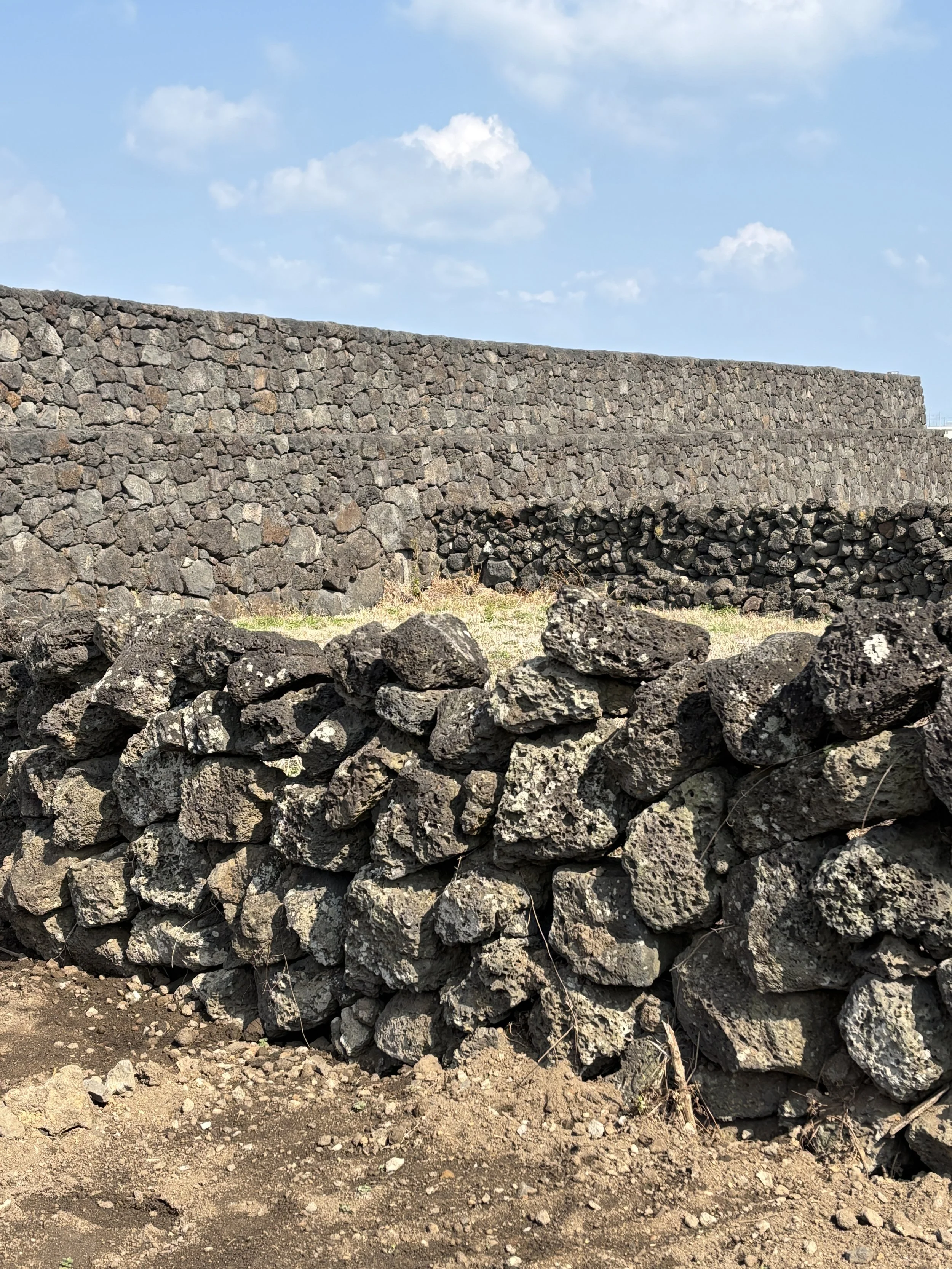
처음 둥지를 텄던 집에서는 떠밀려 나와야 했고, 바다에서도 쫓겨나게 되었다. 외지인을 끌어들이려는 관광 산업과 외지인을 경계하는 분위기 사이에서 떠나지도 못하고, 마음껏 자리 잡지도 못한 채 그 주변을 맴돌았다. 마을과 어촌계, 바다 어디에도 속할 수 없었고, 평생 이해할 수 없을 섬 삶의 감각을 마주했다. 서로를 바라보고 있지만 절대 닿을 수 없는 거리 앞에서, 돌담을 사이에 두고 말로는 담을 수 없는 무언가를 계속 주고받고 있는 상태였다.
이십녀 전의 외지인에 대한 마을 향약에 대한 몇 차례 마찰이 오간 이후, “5년은 살아야지”, “10년은 살아야지”라는 말을 들으며 나는 한동안 바다를 피하게 되었고, 그만큼 깊이 마음을 나눴던 곳에서 다시 거리를 두는 시간을 지나야 했다.
그럼에도 떠날 수가 없었다. 지금 하지 않으면 안 될 것 같은 작업이 더 분명해졌다. 물질하지 않는 날, 모여 쉬고 있는 삼춘들을 지나치지 못하고, 하나 둘 은퇴하기 시작하는 해녀분들의 안부를 묻고 커피를 마시고 밥을 먹으며 시간을 보내다 보니 또 다른 방식으로 관계를 이어가게 되었다.
그렇게 선을 그으면 곧 떠날 줄로만 알았던 우리가 떠나지 않자, 어떻게든 도와주고 싶다며 동네에 비어 있던 집과 창고를 내어주었다. 벽을 뜯어내자 내 나이보다 훨씬 오래된 신문지가 나왔고, 여러 시간에 걸쳐 덧대어진 흔적들을 정리하며 우리의 둥지로 만들어가는 일은 예상보다 훨씬 손이 많이 가는 작업이었다. 그 과정을 지켜보던 이웃들이 하나씩 도움을 보탰다. 이장님의 친구가 좁은 골목에 시멘트 트럭을 보내주고, 편의점 사장님이 전기 공사를 봐주고, 빵집 사장님의 친구가 벽을 만들어주고, 옆집 삼춘이 지붕을 칠해주었다. 마무리될 즈음에는 해녀 삼춘들이 두루마리 휴지와 세제를 문 앞에 놓고 갔다.
그렇게 언러닝스페이스 2.0은 방치되어 있던, 더 이상 쓰이지 않던 공간들에서 만들어지고 있다.
동네 집들을 사들이는 리조트 투자자에게 팔지 않고, 우리에게 써보라고 내어준 선택에는, 빈 공간으로 두는 것보다, 잠깐 스쳐가는 방문자보다, 실제로 사람이 살아가는 일이 만들어내는 보이지 않는 가치에 대한 믿음이 알게 모르게 작동한 것은 아닐까 막연한 희망을 상상해본다.
예상하지 못했던 전개이지만, 이곳에서 나는 또 다른 형태의 삶과 작업을 이어가고 있다. 물속에는 존재하지 않는 경계가, 물 밖에서는 더 크게 작동하고 있다는 사실을 마주하며, 우리는 왜 이렇게 경계를 두고 살아가는지에 대한 질문을 계속 붙들게 된다. 그래서 또다른 방식으로, 보이지 않는 연결과 관계 맺기를 계속 실험해보려 한다.
EN
Over the past couple of years, I have been moving between staying and being pushed away.
As everyday life began to seep into my work, and my work became inseparable from the place I live, I found myself confronting boundaries that were not always beautiful—and at times, the absence of any safe boundary at all. I struggled for a while with how to share these experiences. They were difficult to speak about, both as a process of relationships and as a process of making work—deeply personal, yet shaped by larger sociopolitical structures.
I was forced to leave the house where I had first settled, and I was no longer able to enter the sea as a haenyeo. Caught between a tourism industry that draws outsiders in and a local climate that keeps them at a distance, I found myself unable to leave, yet unable to fully stay. I belonged nowhere—neither to the village, nor the fishing community, nor the sea. I encountered a way of island life I may never fully understand. We faced each other across a distance that could not be crossed, while continuing to exchange something intangible.
After several moments of friction, shaped in part by long-standing village rules, I began to avoid the sea. I had to accept a distance from a place where I had once felt deeply connected.
Still, I could not leave. The urgency of the work I needed to do became even clearer. On off days of diving work, I found myself unable to pass by the grandmothers resting together. I stopped, asked after them—many now beginning to retire—and spent time sharing coffee and meals. Slowly, I began to find another way of relating.
Perhaps expecting us to leave once the lines had been drawn, the neighbors instead offered help for us to stay. They let us use an empty house and abandoned storage space in the village. As we stripped the walls, we found layers of old newspapers, older than myself. Turning that space into a place to live and work required far more labor than expected. Neighbors gradually stepped in—someone arranged a cement truck into the narrow alley, corner store owner helped with electrical work, friends of friends built the walls, and the roof was repaired by next door neighbor. Near the end, rolls of toilet paper and detergent were left at our door by haenyeo grandmothers.
In this way, Unlearning Space 2.0 is taking shape within spaces that had been left empty and unused.
I sometimes wonder if the decision not to sell these houses to resort developers, but instead to let us use them, reflects a quiet belief—that a place gains something when people actually live there, beyond what remains invisible in an empty space or a passing visit.
It was not how I had imagined things would unfold, but here we are, continuing both life and work in another form.
Confronting how boundaries that do not exist underwater become rigid above the surface, I find myself holding onto the question of why we live with such divisions. And so, I continue to explore other ways of relating—seeking forms of connection that remain unseen.